The Short Answer
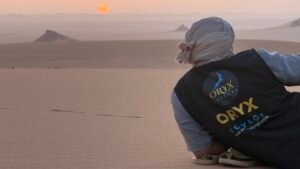
Yes. For most travelers, Algeria’s Sahara is a safe destination when explored as part of a professionally organized expedition. Popular desert regions such as Djanet and Tassili n’Ajjer National Park welcome visitors from around the world each year, offering extraordinary landscapes, ancient rock art, and authentic cultural experiences in one of the world’s most remarkable deserts.
Like any remote wilderness, the Sahara demands preparation and local expertise. The challenges visitors face are not related to crime, but to the natural environment itself—vast distances, changing weather conditions, and the absence of services in isolated areas. For this reason, independent travel into the deep desert is neither practical nor recommended.
Instead, travelers join licensed local operators who carefully plan every aspect of the expedition, including transportation, experienced guides, camping logistics, meals, and safety procedures. With the right team, exploring the Algerian Sahara becomes not only accessible but also a comfortable and deeply rewarding experience.
The region around Djanet has developed an excellent reputation among adventure travelers, photographers, hikers, and cultural explorers. Visitors are welcomed by the Tuareg people, whose knowledge of the desert has been passed down through generations. Their expertise, combined with modern expedition planning, allows travelers to discover places that remain untouched by mass tourism while enjoying a high level of organization and care.
Throughout this guide, we’ll explain how desert expeditions operate, the safety measures taken by professional tour operators, what to expect during your journey, and practical advice to help you prepare for an unforgettable adventure in the Algerian Sahara.
Understanding the Algerian Sahara
When people imagine the Sahara Desert, they often picture an endless sea of sand stretching beyond the horizon. While this image is partly true, the Algerian Sahara is far more diverse and fascinating than many travelers expect.
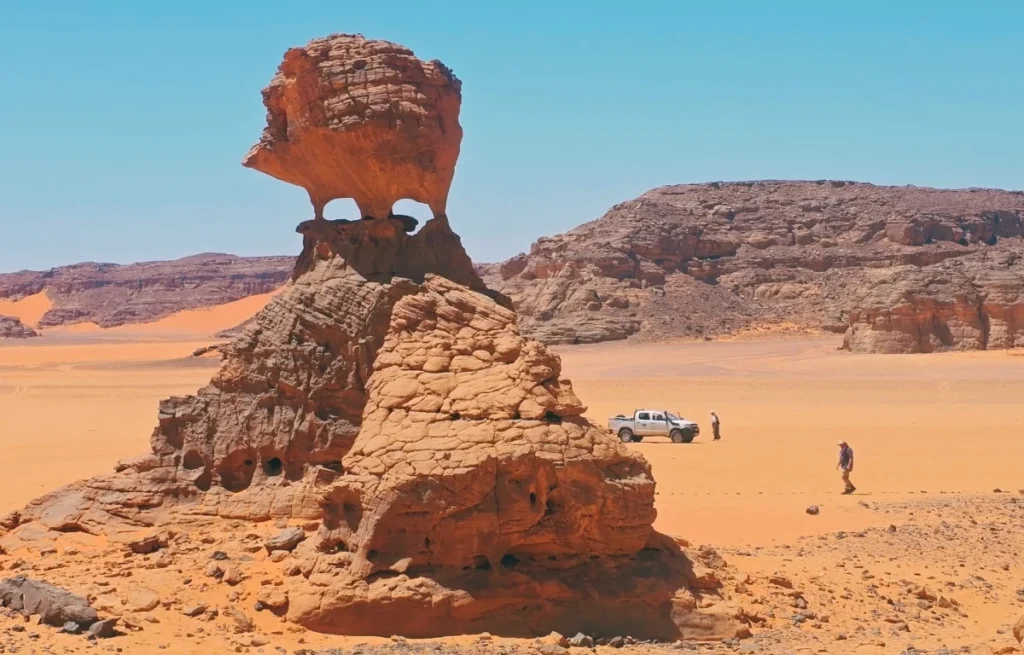
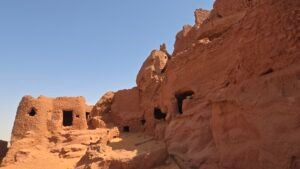
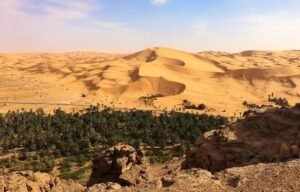
Covering more than 80% of Algeria’s territory, the Sahara is one of the largest and most spectacular desert regions on Earth. Its landscapes range from towering golden dunes and dramatic sandstone formations to deep canyons, volcanic plateaus, lush oases, and some of the world’s most important collections of prehistoric rock art.
The region most visitors explore is Djanet and the surrounding Tassili n’Ajjer National Park, a UNESCO World Heritage Site renowned for its extraordinary natural beauty and archaeological significance. This is not an isolated area where travelers simply drive into the wilderness without planning. Instead, tourism follows well-established routes that have been developed and refined over decades by experienced local guides and licensed tour operators.
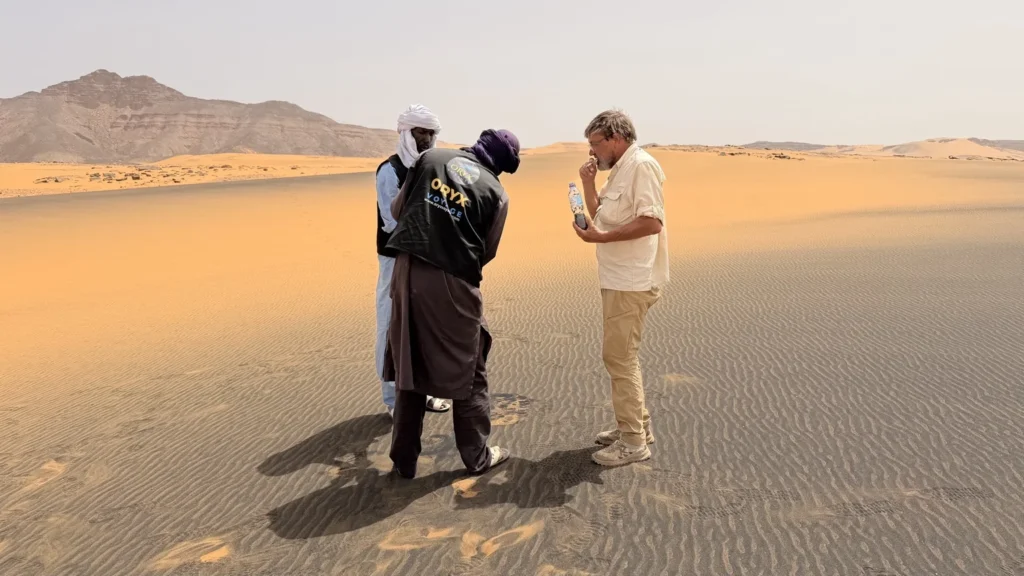
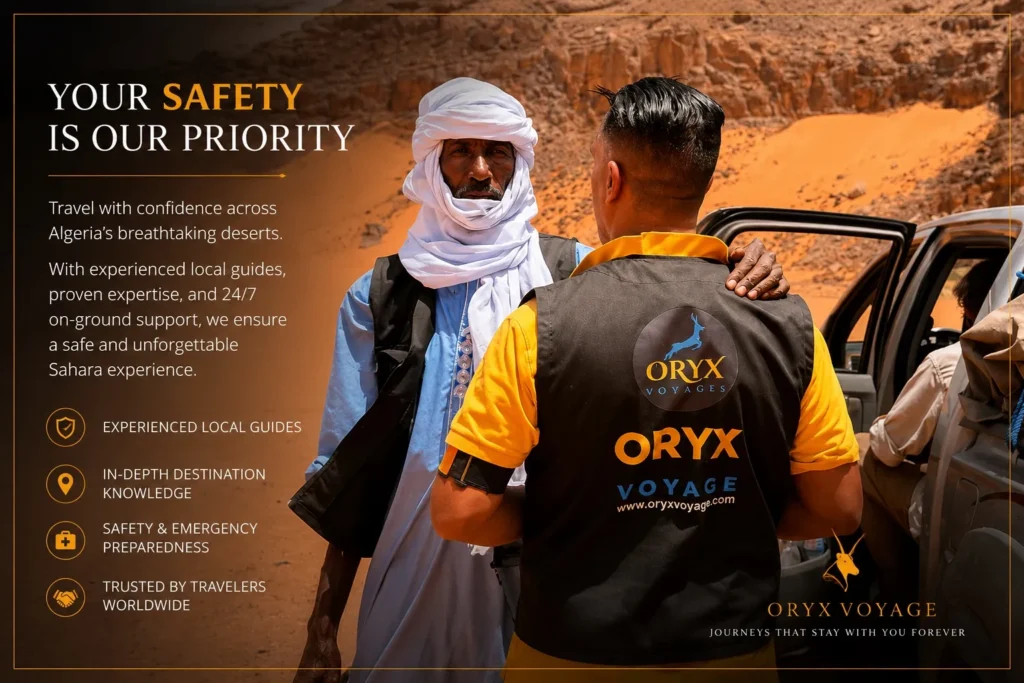
One of the greatest strengths of desert tourism in southern Algeria is the deep knowledge of the Tuareg communities, whose relationship with the Sahara stretches back centuries. Their understanding of the terrain, climate, navigation, and desert traditions plays a vital role in ensuring both the safety and authenticity of every expedition.
It’s also important to understand the scale of the Sahara. Distances between towns can be considerable, mobile phone coverage is limited in remote areas, and services such as fuel stations or medical facilities may be many hours apart. These characteristics don’t make the destination dangerous—they simply mean that successful travel depends on careful planning, appropriate equipment, and experienced local leadership.
For this reason, visitors don’t explore the Algerian Sahara independently. They travel as part of organized expeditions where transportation, accommodation, meals, navigation, permits, and logistics are all carefully coordinated in advance. This allows travelers to focus on the experience itself: watching the sunrise over the dunes, discovering ancient rock paintings, sharing tea with Tuareg guides, and sleeping beneath one of the clearest night skies on Earth.
Far from being a place to fear, the Algerian Sahara is a destination that rewards preparation. With the right team and a well-planned itinerary, it offers one of the most peaceful, inspiring, and unforgettable travel experiences anywhere in the world.
Why Djanet Is One of the Safest Destinations in the Algerian Sahara
For international travelers planning a desert adventure, Djanet has become the gateway to one of the most extraordinary landscapes in North Africa. Nestled in southeastern Algeria near the Libyan border, this peaceful oasis town is the starting point for expeditions into Tassili n’Ajjer National Park, attracting photographers, hikers, archaeologists, and adventure travelers from around the world.
Unlike the common perception of the Sahara as an inaccessible wilderness, tourism around Djanet is well organized and carefully managed. Visitors arrive by domestic flights from Algiers and are welcomed by licensed local tour operators who coordinate transportation, accommodations, permits, meals, and experienced guides before the expedition even begins.
One of Djanet’s greatest strengths is its people. The region is home to the Tuareg, whose deep knowledge of the Sahara has been passed down through generations. Their understanding of the terrain, weather patterns, navigation, and local traditions makes them not only exceptional guides but also trusted companions throughout the journey.
Tourism in Djanet follows established routes inside Tassili n’Ajjer National Park. These itineraries have been explored for many years and are carefully planned according to weather conditions, accessibility, and park regulations. Rather than venturing into unknown territory, travelers follow proven expedition routes under the guidance of experienced local teams.
Another factor contributing to Djanet’s reputation is the atmosphere itself. The town is known for its warm hospitality, relaxed pace of life, and welcoming community. Many visitors are surprised by the friendliness of local residents and the genuine curiosity they encounter throughout their stay. For many travelers, these human connections become just as memorable as the breathtaking desert landscapes.
Like any remote destination, Djanet requires thoughtful planning. Medical facilities are more limited than in major cities, mobile phone coverage disappears in parts of the desert, and distances between settlements can be significant. However, these are characteristics of remote wilderness travel rather than indicators of insecurity. Professional expeditions are specifically designed to address these challenges through careful logistics, experienced guides, reliable vehicles, and well-prepared camping equipment.
For travelers seeking authentic adventure away from mass tourism, Djanet offers something increasingly rare: the opportunity to experience one of the world’s last great wildernesses with the reassurance of expert local guidance and decades of desert travel experience.
Why Travelers Feel Comfortable Visiting Djanet
- Licensed local guides with extensive knowledge of the Sahara.
- Well-established expedition routes through Tassili n’Ajjer National Park.
- Reliable 4×4 vehicles and carefully planned logistics.
- Warm Tuareg hospitality and a welcoming local community.
- Professional tour organization from arrival to departure.
- A peaceful atmosphere far removed from crowded tourist destinations.
Oryx Insight
At Oryx Voyage, we’ve welcomed travelers from dozens of countries to Djanet over the years. One comment we hear again and again is the same: “The desert felt far more peaceful, welcoming, and organized than we ever imagined.” That transformation—from uncertainty before arrival to complete amazement after experiencing the Sahara—is one of the reasons so many of our guests leave Algeria with unforgettable memories and a completely new perspective on the country.
Why You Should Never Explore the Sahara Without a Local Guide
One of the biggest misconceptions about the Sahara is that it’s simply a vast open desert where travelers can navigate freely with a GPS or a map. In reality, the Algerian Sahara is an immense and constantly changing environment where experience and local knowledge are essential.
The primary risks in the Sahara are environmental rather than security-related. Vast distances, extreme temperatures, limited water sources, changing sand conditions, and the absence of signposted roads mean that even experienced outdoor enthusiasts should never attempt to explore the desert alone.
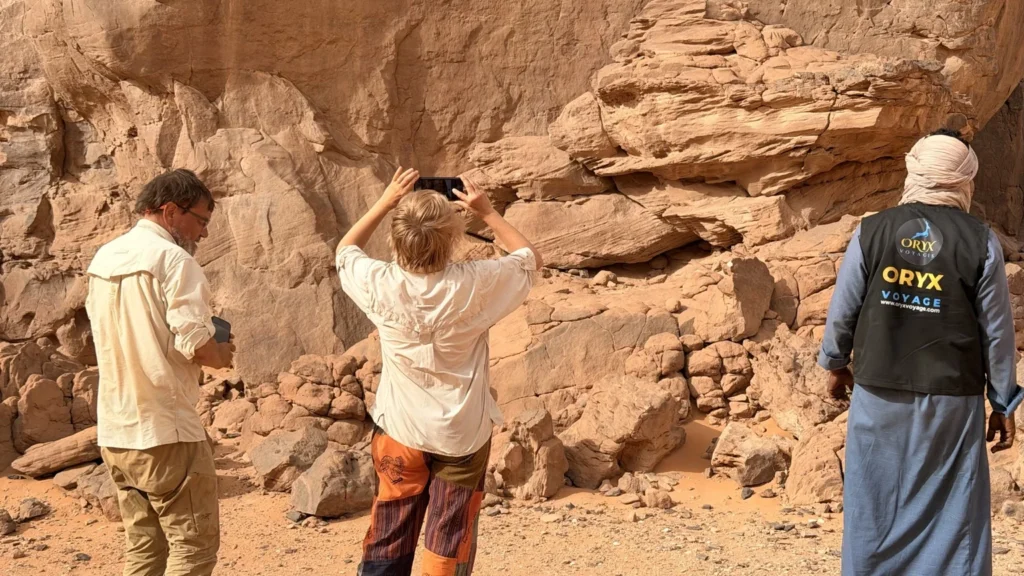
Many of the most spectacular places in Tassili n’Ajjer National Park are accessible only by tracks known to local guides. Ancient rock art sites, hidden canyons, natural arches, and remote dunes often lie far from paved roads, and reaching them requires both expert navigation and an understanding of the terrain.
Experienced Tuareg guides bring much more than navigation skills. They know where to find suitable campsites, how to read changing weather conditions, how to manage long desert drives, and how to adapt an itinerary if conditions require it. Their knowledge has been developed over generations of living and traveling in one of the world’s most demanding environments.
Professional expeditions also ensure that every practical detail has been carefully planned before departure. Vehicles are prepared for remote travel, sufficient drinking water and food supplies are carried throughout the journey, camping equipment is organized in advance, and permits for protected areas are arranged before entering the national park.
Traveling with a local guide also enriches the experience in ways that no guidebook can. Beyond ensuring your safety, they share the stories behind ancient rock paintings, explain Tuareg traditions, identify desert wildlife, and introduce travelers to the cultural heritage that makes the Algerian Sahara unlike any other destination in the world.
Perhaps most importantly, traveling with experienced guides allows visitors to relax completely. Instead of worrying about navigation, logistics, or finding the next campsite, travelers can focus on watching the sunrise over the dunes, photographing spectacular sandstone formations, listening to traditional Tuareg music around the campfire, and appreciating the profound silence that makes the Sahara so unforgettable.
Why Organized Desert Expeditions Are Recommended
A professionally organized expedition typically includes:
- Experienced local Tuareg guides.
- Reliable 4×4 vehicles designed for desert travel.
- Carefully planned routes and daily itineraries.
- Camping equipment and overnight logistics.
- Sufficient food and drinking water throughout the expedition.
- National Park permits and local authorizations.
- Continuous local support from arrival to departure.
Travel Tip
The best desert journeys are not about finding your own way—they’re about traveling with people who have spent a lifetime knowing the way. Local expertise transforms the Sahara from an intimidating wilderness into one of the most rewarding travel experiences on Earth.
Safety During an Organized Desert Expedition
A successful Sahara expedition begins long before the first vehicle leaves Djanet. Every stage of the journey is carefully planned to ensure travelers can enjoy the experience with complete peace of mind.
Professional desert expeditions rely on preparation rather than improvisation. Routes are selected according to weather conditions, road accessibility, and the duration of each day’s journey. Campsites are chosen in advance, daily distances are carefully calculated, and every member of the expedition understands their role before departure.
Transportation is another key element of desert safety. Expeditions through Tassili n’Ajjer are conducted using well-maintained 4×4 vehicles specifically suited to desert terrain. These vehicles are driven by experienced local drivers who understand how to navigate sand dunes, rocky plateaus, dry riverbeds, and mountain passes safely and efficiently.
Water management is equally important. The Sahara’s dry climate means hydration is essential throughout the journey. Organized expeditions carry ample supplies of drinking water for the entire group, ensuring that travelers remain comfortable even in remote areas where no services are available.
Meals are also carefully planned. Fresh ingredients are transported with the expedition and prepared daily by experienced camp staff, allowing travelers to enjoy authentic Saharan cuisine in a clean and organized environment. Sharing meals beneath the open sky often becomes one of the highlights of the journey, combining local flavors with unforgettable desert scenery.
Accommodation is designed to provide both comfort and immersion in nature. Depending on the itinerary, travelers may stay in comfortable hotels in Djanet before and after the expedition, while nights in the desert are spent in carefully selected campsites equipped with quality tents, sleeping mattresses, and communal dining areas. Camps are chosen not only for their spectacular surroundings but also for their suitability and safety.
Communication and logistics remain a priority throughout the expedition. Local teams continually monitor the progress of the journey, adapt plans when necessary, and maintain close coordination to ensure that every stage of the itinerary runs smoothly. This level of organization allows travelers to focus entirely on discovering the beauty of the Sahara rather than worrying about practical details.
Perhaps the greatest safety measure of all is experience. Many Tuareg guides have spent their entire lives navigating these landscapes. Their ability to read the desert, anticipate changing conditions, and care for guests is the result of generations of knowledge that cannot be learned from maps or technology alone.
For travelers, this careful preparation transforms what might seem like a challenging expedition into a relaxed and enjoyable adventure. Every sunrise over the dunes, every hike through sandstone canyons, and every evening around the campfire is made possible by the quiet professionalism of the team working behind the scenes.
What Professional Desert Expeditions Typically Provide
✓ Experienced Tuareg guides with extensive local knowledge.
✓ Well-maintained 4×4 vehicles suitable for desert terrain.
✓ Carefully planned routes and daily travel schedules.
✓ Reliable supplies of drinking water throughout the expedition.
✓ Freshly prepared meals in organized desert camps.
✓ Comfortable camping equipment and quality accommodations.
✓ Continuous logistical support from arrival to departure.
✓ Local expertise to adapt safely to changing desert conditions.
Oryx Insight
At Oryx Voyage, we believe that the best safety measures are often the ones travelers never notice. Long before you arrive in Djanet, our team has already coordinated vehicles, accommodations, permits, guides, meals, and every logistical detail. Once your journey begins, our goal is simple: to let you experience the magic of the Sahara while we quietly take care of everything else.
Health & Medical Considerations for Desert Travel
Traveling through the Algerian Sahara is an unforgettable experience, but like any journey into a remote natural environment, it requires a little preparation. Fortunately, most travelers discover that with sensible precautions and the guidance of an experienced expedition team, exploring the desert is comfortable, enjoyable, and suitable for people of all ages and fitness levels.
The most important factor is hydration. The Sahara’s dry climate causes the body to lose moisture more quickly than many visitors realize, even during the cooler months. Drinking water regularly throughout the day is the simplest and most effective way to stay healthy during your expedition. Professional tours ensure that drinking water is always readily available, encouraging travelers to stay hydrated at every stage of the journey.
Protection from the sun is equally important. Although the best season for visiting Djanet is between October and April, when temperatures are generally pleasant, the desert sun remains powerful. A wide-brimmed hat, sunglasses with UV protection, lightweight long-sleeved clothing, and high-quality sunscreen are essential items for every traveler.
Footwear also plays an important role in comfort and safety. Many of the walks through Tassili n’Ajjer involve rocky terrain, soft sand, and uneven surfaces. Comfortable hiking shoes or lightweight trekking boots with good grip provide stability while allowing you to enjoy the spectacular scenery with confidence.
One of the most pleasant surprises for first-time visitors is that desert travel is not physically demanding in the way many people imagine. Most itineraries are designed at a relaxed pace, with regular breaks for photography, tea, meals, and sightseeing. Walks are generally optional and can often be adapted to suit different levels of fitness, making these journeys accessible to couples, families, photographers, and senior travelers alike.
If you take prescription medication, it’s advisable to bring enough for the entire journey, along with a copy of your prescription if required. While Djanet has basic medical services, remote desert camps are naturally far from pharmacies or hospitals, making preparation an important part of responsible travel.
Travel insurance is also strongly recommended for every visitor to Algeria. A comprehensive policy that covers medical expenses, trip interruptions, and emergency assistance provides additional peace of mind throughout your adventure.
Finally, listen to your guides. The Tuareg have lived and traveled in these landscapes for generations, and their advice on pacing, hydration, weather conditions, and daily activities is invaluable. Following their guidance allows you to relax and fully appreciate one of the world’s most extraordinary natural environments.
Staying Healthy in the Sahara
Before your journey, remember these simple recommendations:
- Drink water regularly, even if you don’t feel thirsty.
- Wear a hat, sunglasses, and sunscreen every day.
- Choose comfortable walking shoes with good grip.
- Bring any personal medication you may need.
- Pack lightweight clothing for warm days and a warm layer for cool evenings.
- Purchase comprehensive travel insurance before arriving in Algeria.
- Follow your guide’s advice throughout the expedition.
Oryx Tip
The Sahara isn’t about endurance—it’s about slowing down. Our itineraries are designed with comfort in mind, balancing exploration with plenty of time to rest, enjoy the scenery, and experience the peaceful rhythm of desert life. For most travelers, the greatest challenge isn’t the walking—it’s finding enough space on their camera memory cards for all the incredible photographs.
Is Algeria Safe for Solo and Female Travelers?
One of the most common questions we receive from international visitors is whether Algeria is suitable for solo travelers and women traveling independently. The answer depends largely on where you travel and how you travel.
For travelers joining professionally organized tours, destinations such as Djanet and Tassili n’Ajjer National Park are welcoming and well-suited to solo adventurers, couples, groups of friends, and families alike. Organized expeditions provide the reassurance of experienced local guides, carefully planned logistics, and the opportunity to share unforgettable experiences with fellow travelers or enjoy the privacy of a tailor-made itinerary.
Solo Travelers
Many people choose to visit Algeria alone, particularly photographers, hikers, and adventure travelers seeking destinations that remain authentic and relatively untouched by mass tourism. Traveling independently does not mean exploring the Sahara without support. Most visitors join a licensed local operator who takes care of transportation, accommodation, permits, meals, and guiding throughout the expedition.
For solo travelers, this approach offers several advantages. It removes the stress of planning complex logistics, provides access to remote locations that cannot easily be reached independently, and allows travelers to focus entirely on the experience. Many guests also appreciate the opportunity to spend time with local Tuareg guides, learning about their culture, traditions, and way of life while exploring the desert.
Female Travelers
Women travel to Algeria every year and many describe their experience as warm, respectful, and welcoming. As in any country, understanding local customs and cultural expectations helps visitors feel more comfortable and ensures respectful interactions with local communities.
In cities and traditional villages, modest clothing is generally appreciated, particularly when visiting religious or cultural sites. In the Sahara, the atmosphere is often relaxed, and practical, lightweight clothing suitable for desert conditions is the best choice. Many female travelers enjoy the genuine hospitality they receive from local families and guides, often noting that they felt welcomed rather than treated as tourists.
Choosing an experienced tour operator provides additional reassurance, particularly for first-time visitors to Algeria. From airport arrival to departure, professional teams remain available to assist with every aspect of the journey, allowing travelers to explore with confidence.
Respecting Local Culture
One of the greatest rewards of traveling in Algeria is the opportunity to experience a culture built on hospitality. Greeting people politely, asking permission before photographing individuals, dressing respectfully in towns and villages, and showing interest in local traditions are simple gestures that are always appreciated.
These small acts of cultural respect often lead to memorable conversations, invitations to share traditional tea, and genuine encounters that become some of the highlights of a journey through the Sahara.
Practical Tips for Solo and Female Travelers
- Join a licensed and experienced local tour operator for desert expeditions.
- Dress comfortably and respectfully, particularly in towns and cultural sites.
- Carry copies of important travel documents.
- Inform family or friends of your itinerary before departure.
- Respect local customs and ask permission before photographing people.
- Follow the guidance of your local team throughout the journey.
Oryx Insight
At Oryx Voyage, we’ve had the privilege of welcoming solo travelers, couples, families, photographers, and women traveling independently from many different countries. While every journey is unique, the feedback is remarkably consistent: visitors are often surprised by the warmth of the welcome they receive, the professionalism of the local teams, and the sense of peace they experience in the Algerian Sahara.
Common Misconceptions About Desert Travel in Algeria
For many international travelers, Algeria remains one of the world’s least understood destinations. Because it receives fewer international visitors than some neighboring countries, misconceptions often spread more quickly than accurate information. Let’s look at some of the most common myths—and the reality behind them.
Myth 1: “The Algerian Sahara Is Dangerous”
Reality: The vast majority of visitors explore the Algerian Sahara as part of professionally organized expeditions. Popular destinations such as Djanet and Tassili n’Ajjer National Park have welcomed travelers, photographers, and adventure enthusiasts from around the world for many years.
The primary challenges of the Sahara are environmental rather than security-related. Long distances, remote landscapes, and changing weather conditions are exactly why experienced local guides and organized tours are recommended.
Myth 2: “The Sahara Is Just Endless Sand”
Reality: This is one of the biggest surprises for first-time visitors.
The Algerian Sahara is incredibly diverse. During a single expedition, you may discover:
- Towering golden sand dunes.
- Dramatic sandstone arches.
- Deep canyons.
- Ancient river valleys.
- Volcanic plateaus.
- Lush desert oases.
- Thousands of prehistoric rock paintings.
Many travelers leave saying the landscapes were far more varied than they had ever imagined.
Myth 3: “There Is No Tourism Infrastructure”
Reality: While the Sahara remains one of the world’s last great wildernesses, tourism in Djanet is well established.
Visitors benefit from:
- Domestic flights connecting Algiers and Djanet.
- Comfortable hotels before and after expeditions.
- Licensed local tour operators.
- Experienced Tuareg guides.
- Well-organized desert camps.
- Reliable transportation throughout the journey.
The experience is intentionally authentic, but it is also professionally organized.
Myth 4: “It’s Too Hot to Visit”
Reality: Timing makes all the difference.
The most popular travel season runs from October to April, when daytime temperatures are generally pleasant for hiking, sightseeing, and camping. Winter evenings can even become surprisingly cool, making warm clothing an essential part of your packing list.
Choosing the right season allows visitors to experience the Sahara comfortably while enjoying spectacular sunrises, sunsets, and clear night skies.
Myth 5: “It’s Difficult to Reach Djanet”
Reality: Reaching Djanet is much easier than many travelers expect.
Most international visitors arrive in Algiers, where they connect to a domestic flight to Djanet. Once they arrive, their local tour operator takes care of airport transfers, accommodations, transportation, permits, and every logistical detail throughout the expedition.
For most guests, the journey to Djanet is straightforward and well organized.
Myth 6: “There’s No Mobile Signal or Communication”
Reality: Mobile coverage is available in Djanet and other populated areas but becomes limited or unavailable in remote parts of the desert.
Rather than being a disadvantage, many travelers describe this as one of the most rewarding aspects of the journey. Free from constant notifications and distractions, they reconnect with nature, enjoy meaningful conversations around the campfire, and experience a rare sense of peace beneath one of the clearest night skies in the world.
The Reality of Desert Travel
The Algerian Sahara is neither an extreme survival expedition nor a luxury resort destination. It offers something far more meaningful: an authentic adventure through extraordinary landscapes, guided by people whose connection to the desert spans generations.
With realistic expectations, careful preparation, and the support of an experienced local team, travelers discover that the Sahara is not a place to fear—it’s a place to slow down, reconnect with nature, and experience one of the last truly untouched regions on Earth.
Oryx Insight
One comment we hear time and again from our guests is:
“Everything I thought I knew about Algeria changed the moment I arrived.”
From the warmth of the Tuareg welcome to the silence of the desert and the breathtaking landscapes of Tassili n’Ajjer, many travelers leave not only with incredible photographs but also with a completely new perspective on Algeria and its people.
Essential Safety Tips for Traveling in the Algerian Sahara
Exploring the Algerian Sahara doesn’t require special survival skills, but it does reward thoughtful preparation. By following a few simple recommendations and relying on experienced local guides, you can enjoy a comfortable, safe, and unforgettable adventure.
Whether you’re visiting Djanet for the first time or returning to discover more of the Sahara, these practical tips will help you make the most of your journey.
1. Travel With a Licensed Local Tour Operator
The most important decision you’ll make is choosing an experienced and reputable local operator. Professional expeditions take care of transportation, accommodation, permits, meals, logistics, and experienced guides, allowing you to explore the desert safely while respecting local regulations and protected areas.
2. Visit During the Best Season
The ideal time to explore the Algerian Sahara is between October and April, when temperatures are generally pleasant for walking, sightseeing, and camping.
Summer temperatures can become extremely high, making outdoor activities significantly more demanding.
3. Stay Hydrated
The desert climate is very dry, and dehydration can occur even when temperatures feel comfortable.
Drink water regularly throughout the day, avoid waiting until you feel thirsty, and follow your guide’s recommendations regarding hydration during walks and excursions.
4. Dress for the Desert
Choose lightweight, breathable clothing that protects you from the sun while remaining comfortable.
A typical packing list includes:
- Lightweight long-sleeved shirts.
- Comfortable walking trousers.
- A wide-brimmed hat or desert scarf.
- Sunglasses with UV protection.
- High-quality sunscreen.
- Comfortable hiking shoes.
- A warm jacket or fleece for cool evenings.
5. Respect the Desert Environment
The Sahara is one of the world’s most fragile ecosystems.
Help preserve it by:
- Leaving no litter behind.
- Respecting archaeological and rock art sites.
- Staying on established routes with your guides.
- Avoiding damage to plants or wildlife.
Responsible tourism helps protect Tassili n’Ajjer for future generations.
6. Respect Local Culture
Hospitality is one of Algeria’s greatest treasures.
Simple gestures such as greeting people politely, dressing respectfully in towns, asking permission before photographing individuals, and showing interest in local traditions are greatly appreciated and often lead to meaningful cultural exchanges.
7. Listen to Your Guides
Your Tuareg guides know the desert better than anyone.
Their advice regarding walking routes, weather conditions, camp procedures, and daily activities is based on generations of experience.
Following their guidance allows you to relax and fully enjoy every moment of the expedition.
Quick Safety Checklist
Before your departure, make sure you have:
✅ Comprehensive travel insurance.
✅ Comfortable walking shoes.
✅ Sun protection (hat, sunglasses, sunscreen).
✅ Personal medication for the entire trip.
✅ A reusable water bottle.
✅ A camera with extra batteries and memory cards.
✅ A spirit of adventure and curiosity.
Final Thoughts
The Algerian Sahara is not a destination to rush through—it’s a place to slow down, disconnect from everyday life, and reconnect with nature. With the support of experienced local guides, sensible preparation, and an open mind, you’ll discover that the greatest reward of desert travel isn’t simply the breathtaking landscapes—it’s the sense of peace, wonder, and perspective that stays with you long after you return home.
Oryx Insight
Every expedition teaches the same lesson: the Sahara rewards preparation, patience, and curiosity. Travelers who arrive with realistic expectations and a willingness to embrace the rhythm of the desert almost always leave saying the same thing—“It was even more extraordinary than I imagined.”
Frequently Asked Questions About Desert Travel in Algeria
Is Algeria safe for tourists?
Yes. Most visitors to Algeria enjoy a safe and memorable trip, particularly when traveling through established tourist destinations and using licensed local tour operators. As with any international destination, it’s important to stay informed, follow local advice, and plan your itinerary carefully. For remote regions such as the Sahara, joining an organized expedition is the recommended way to travel.
Is Djanet safe to visit?
Yes. Djanet is widely regarded as the gateway to Algeria’s Sahara and is one of the country’s best-known destinations for desert tourism. Visitors from around the world travel to Djanet each year to explore Tassili n’Ajjer National Park with experienced local guides.
Do I need a guide to visit Tassili n’Ajjer?
Yes. Exploring Tassili n’Ajjer National Park should always be done with experienced local guides. The park is vast, remote, and protected, and organized expeditions ensure safe navigation, proper logistics, and respect for the natural and archaeological heritage of the region.
Is the Algerian Sahara safe for solo travelers?
Yes, many solo travelers visit the Algerian Sahara each year. Most choose to travel with a licensed tour operator, allowing them to enjoy the adventure without worrying about transportation, navigation, accommodation, or permits.
Is Algeria safe for female travelers?
Many women travel to Algeria successfully every year, particularly as part of organized tours. Dressing respectfully in towns and cultural sites, understanding local customs, and traveling with experienced guides help create a comfortable and rewarding experience.
What is the best time to visit the Algerian Sahara?
The best season is generally October through April, when daytime temperatures are comfortable for sightseeing, hiking, and camping. These months also offer spectacular sunrises, clear night skies, and pleasant evenings around the campfire.
Is camping in the Sahara comfortable?
Yes. Organized desert expeditions provide quality camping equipment, comfortable sleeping arrangements, freshly prepared meals, and carefully selected campsites. Many travelers describe spending a night beneath the Sahara stars as one of the highlights of their journey.
Is there internet and mobile phone coverage?
Mobile phone coverage is available in Djanet and other populated areas but becomes limited or unavailable in remote parts of the desert. Many visitors see this as an opportunity to disconnect from daily routines and fully immerse themselves in the experience.
What should I pack for a Sahara expedition?
Essential items include:
- Comfortable walking shoes
- Lightweight clothing
- A warm jacket for cool evenings
- Hat and sunglasses
- Sunscreen
- Personal medication
- Camera and spare batteries
- Reusable water bottle
- Power bank
Are there dangerous animals in the Sahara?
Wildlife exists throughout the Sahara, but encounters with potentially dangerous animals are uncommon. Professional guides know the environment well and select campsites carefully. Following their instructions and respecting nature are generally all that’s required.
Can families travel to Djanet?
Yes. Many families choose to explore the Sahara together. Depending on the itinerary and the age of the children, expeditions can often be adapted to provide a comfortable and enjoyable experience for all members of the family.
Why should I choose an organized expedition instead of traveling independently?
An organized expedition provides experienced local guides, reliable transportation, accommodation, meals, permits, and logistical support throughout the journey. This not only improves safety but also allows you to focus entirely on enjoying the landscapes, culture, and history of the Algerian Sahara.
Ready to Experience the Algerian Sahara?
Reading about the Sahara is inspiring—but standing among the sandstone forests of Tassili n’Ajjer, watching the sun set over endless dunes, and sharing tea with Tuareg guides is something words can never fully capture.
At Oryx Voyage, we’ve spent years introducing travelers from around the world to the beauty, culture, and authenticity of southern Algeria. Every expedition is thoughtfully designed, professionally organized, and led by experienced local teams who know the desert as their home.
Whether you’re dreaming of ancient rock art, breathtaking landscapes, unforgettable photography, or simply the silence of the Sahara beneath a sky filled with stars, we’ll help you plan a journey that’s both safe and extraordinary.
Begin Your Journey
Discover our 9-Day Djanet & Tassili n’Ajjer Expedition and experience one of the world’s last truly untouched destinations with complete confidence.